Materials
Tropical Indonesia is paradise for people and purgatory for timber: heat, 80% humidity, insects, salt air. After 60+ builds, here is exactly which species we put where - and where the imported wood is genuinely worth its container ride.
Materials guide · 2026-08-28
A sauna asks contradictory things of wood: stay dimensionally calm through 30→90 °C swings, hold no scalding resin, smell good for a decade, and - in this climate - shrug off fungus and termites the moment the heater is off. No single species does it all, which is why our builds mix four.
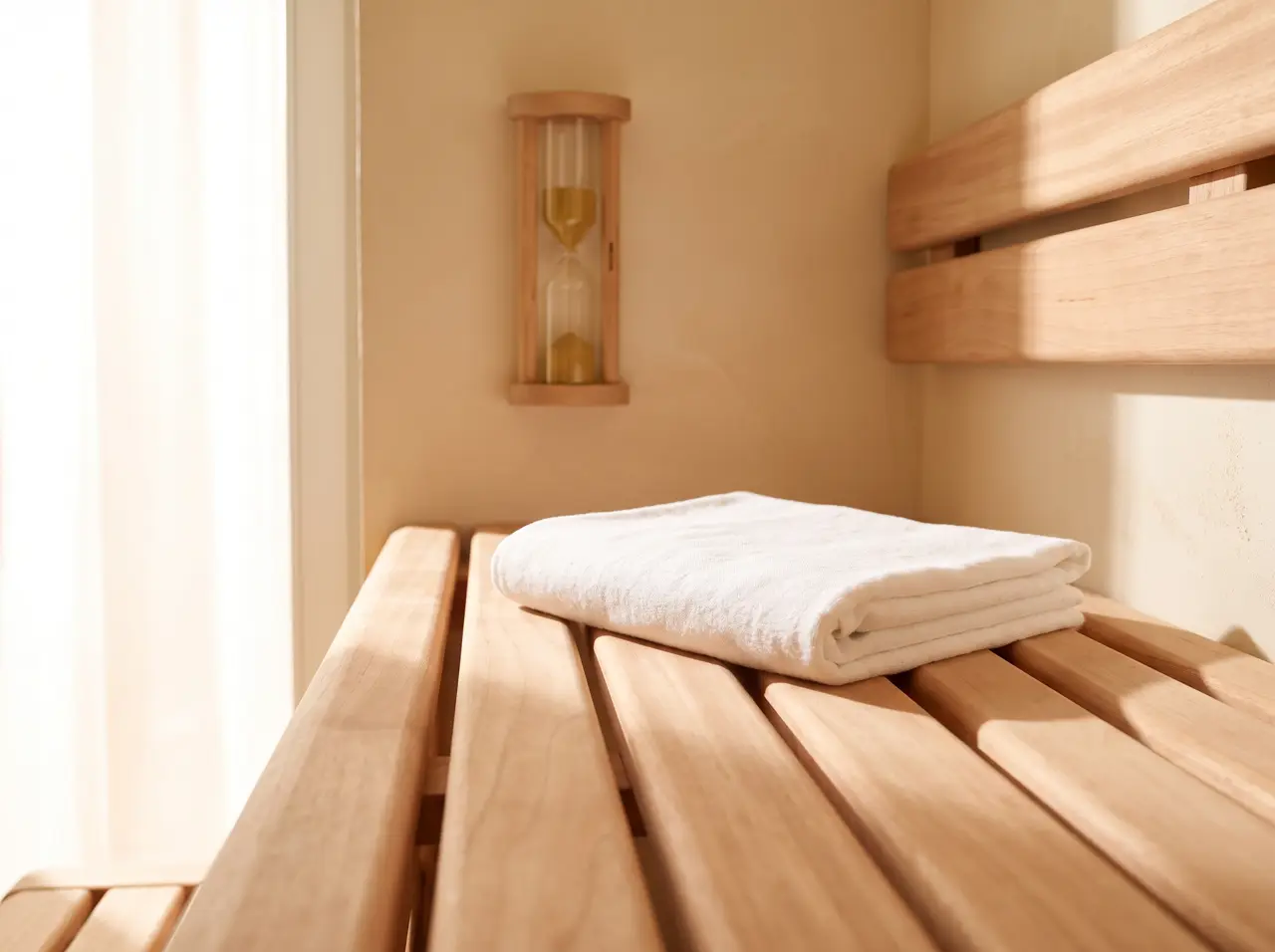
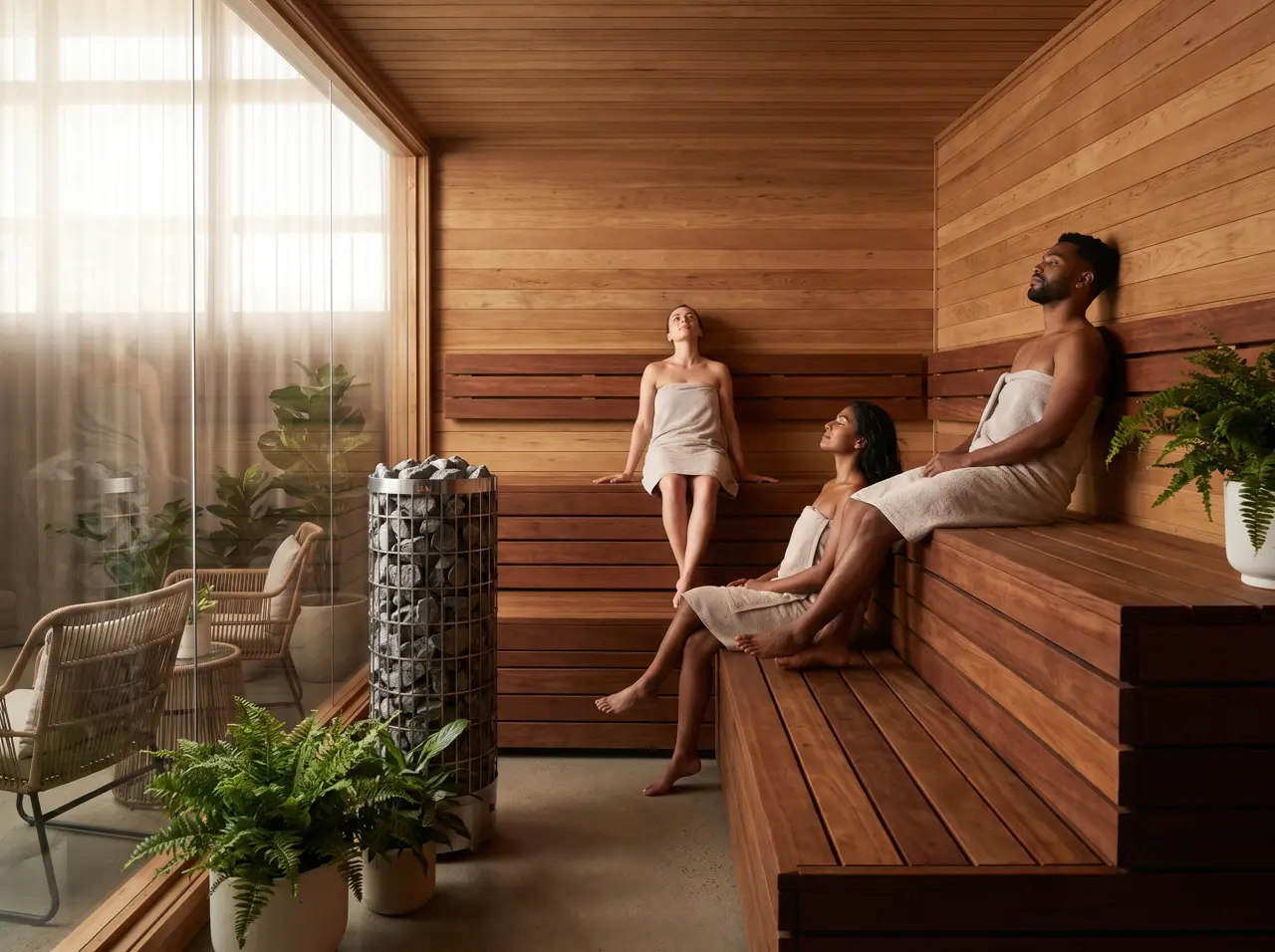
Cedar is the classic sauna interior: light, knot-free grades, thermally calm (cool enough to lean on at 90 °C), naturally rot-resistant, and the scent guests recognise with their eyes closed. Indonesia grows no true equivalent, so we import it - and reserve it for where it earns: interior cladding and matching barrel tubs. When a budget needs trimming, cedar walls with local benches beat cedar everything.
Plantation teak is Indonesia's gift to this trade: dense, oily, nearly indifferent to rain, insects and time. We use it for tub bodies, doors, exterior cladding - and it is the default for ice bath staves. One honest caveat: in full sun teak surfaces get hot, and its density makes it wrong for sauna benches - high thermal mass burns thighs at 90 °C.
Low resin, moderate density, smooth grain: plantation mahogany makes benches, backrests and trims that stay comfortable at temperature. It is our local answer to imported abachi - at a fraction of the logistics.
Hard, dense, slip-resistant when ribbed: bengkirai takes decks, platforms and wet-zone floors around tubs and plunge pools. Too hard and too hot for interiors; unbeatable underfoot.
| Species | Origin | Use | Avoid for |
|---|---|---|---|
| Western red cedar | imported (Canada) | sauna interiors, barrel tubs | decks in full sun |
| Teak | Indonesia, plantation | tub bodies, doors, exteriors | sauna benches |
| Mahogany | Java, plantation | benches, backrests, trim | structural outdoor |
| Bengkirai | Kalimantan | decks, platforms, wet floors | interior cladding |
Species questions usually resolve in one photo of your site - send it via contact and we answer with a materials sheet. For how wood pairs across a whole circuit, see contrast therapy sets.
Wrong question - it is different. Teak beats cedar outdoors; cedar beats teak inside the hot room. Paying for cedar decks or teak benches is paying to make things worse.
Good where supply is honest - treatment improves stability and rot resistance. We use thermo-treated local species selectively; ask per project.
Oiling twice a year, rinse-downs, and shade where the layout allows. Year one our service visits do it with your staff; after that it is an afternoon per half-year.
Keep reading
Capacity, kW per m³, bench geometry: sizing a sauna that actually gets hot.
View →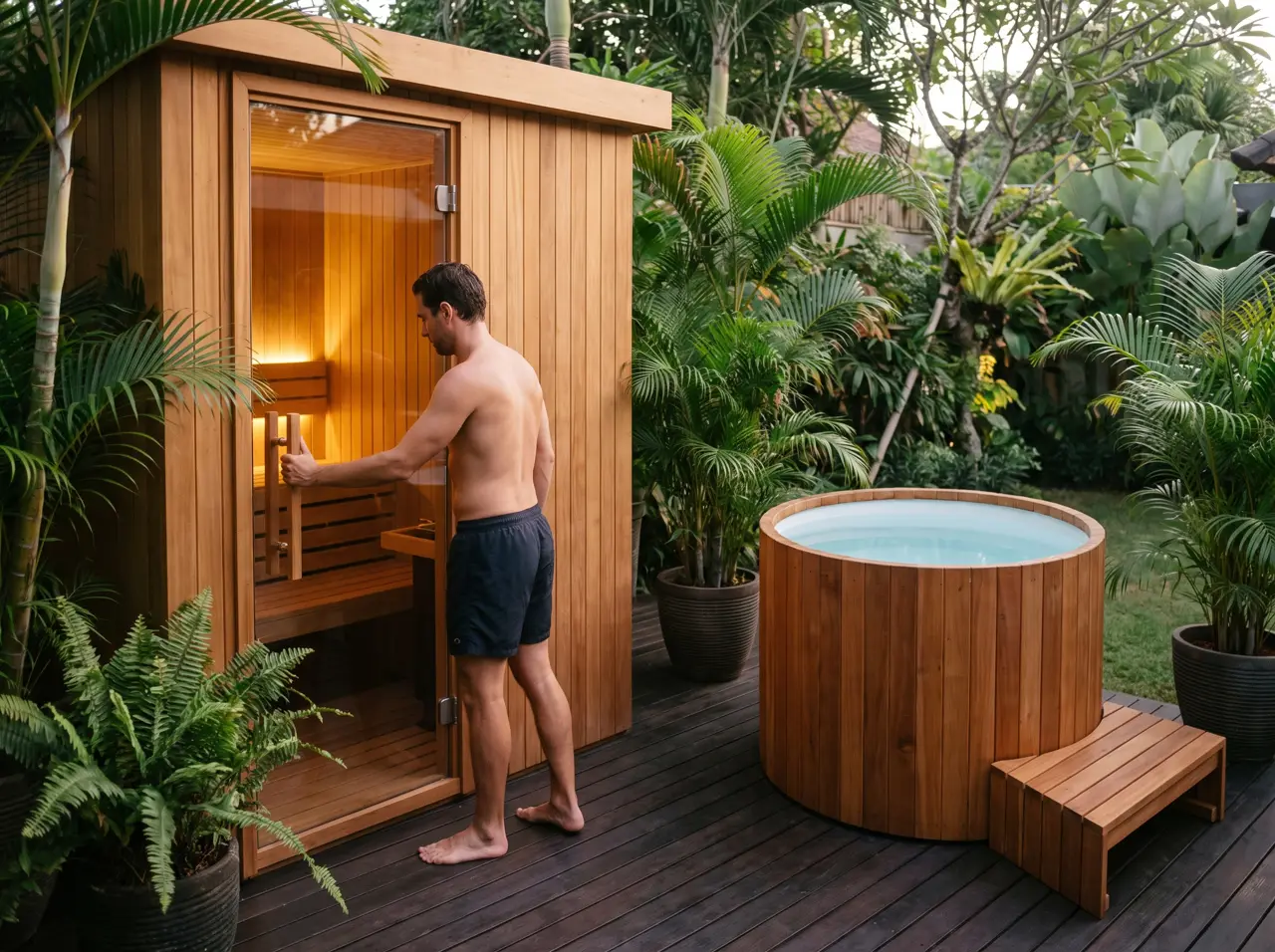
The hot-cold cycle through actual studies: what is proven, promising, and hype.
View →
From first-timer 12 °C to athlete 5 °C: protocols per audience, sourced.
View →Questions?
Tell us about the property - we reply with a layout sketch, equipment list and an indicative budget.